🌍 Introduction
In today's busy and modern life, there are lots of people experiencing long-term stress, and the important fact is that it is spreading all over like a disease, but the people don't realize it is happening, and the people don't speak about it even if they are badly suffering from it. Whether it is because of work, financial problems, or due to any personal issues, the long-term stress can definitely make serious damage to your health, and you might not even know that stress is what's really causing them. And one of the most common but usually ignored consequences of chronic or long-term stress is weight gain.Now we will go deep and understand the connection between long-term stress and weight gain, and we will also discuss how you can get rid of this problem.
🔔 What is Chronic Stress?
Chronic stress simply means that your body stays stressed or emotionally drained for a long period of time, and this is because you are feeling worried or under pressure for many days, weeks or even months. And what you have to understand is that this type of stress is not the same as the short-term stress.The short-term stress that usually happens to everyone may be just before an exam or an interview, and it is completely normal to have short-term stress. And in case the stress becomes chronic or long-term, it can lead to physical issues like headaches or high blood pressure and emotional issues like anxiety or sadness, and it can also lead to behavioral problems like eating more and more food or sleeping difficulties.
The very common reasons include:
- Too much work without a break.
- Financial issues or money problems
- Problems in personal relationships.
- Health issues or feeling afraid that you might be sick
👨 Doctor's Insight:
The chronic stress not only influences your mood, but it can also have a negative impact on your different body systems, like metabolism and appetite control. In routine clinical practice, managing the stress in early stages can really help to lower the chronic metabolic problems to a good extent.

🔍 Cortisol
When you are in a stressful situation, your body releases or secretes a hormone known as cortisol, and usually we call it a stress hormone.But how does cortisol play a role in increasing body weight?
Here's the answer:
1) Cortisol will make you feel hunger and also increase your food cravings, mainly for sweet foods like chocolate or for fatty foods like fried snacks or fast food.2) Cortisol promotes your body to store more and more fat around your stomach region.
3) Cortisol makes your body react poorly to insulin and will also make your body burn fewer calories.
Various research shows that the individuals having increased cortisol levels usually gain more body weight slowly as time passes, especially around the stomach area, and this fat deposition can increase the likelihood of having diabetes and heart diseases.
👨 Doctor's Insight:
Cortisol is a very important hormone for the normal functioning of your body, but when there is a persistent increase in the cortisol level because of stress, then it can disturb the body signals of hunger and also the fat distribution. Because of this, managing the stress is equally as essential as your proper diet and regular exercise for maintaining a good, healthy body weight.
📢 Stress Causes Hormonal Imbalances
Chronic stress not only increases your cortisol level, but it can also disrupt other major hormones which control the body weight.⭐ Insulin - Experiencing chronic stress can reduce its efficiency, which leads to easier storage of fat.
⭐ Thyroid hormones - Chronic stress will increase the cortisol level, and this will, in turn, affect the thyroid hormone function, and that will lead to slow metabolism, which will make it harder to achieve the weight loss.
⭐ Sex hormones like estrogen and progesterone - Here, the stress will increase the cortisol release, leading to disturbance and imbalance of progesterone and estrogen hormones, and this will affect how your body stores fat, and this causes fat to accumulate more in areas like your abdomen, causing belly fat instead of storing it in the thigh or hip.
So is it possible to regulate these hormones in a natural way?
Yes, for this, you have to get sufficient sleep of 7 to 9 hours. Daily, you have to work out or exercise regularly, do meditation, and reduce the caffeine intake. So these natural methods will help your hormones to function in a normal and good way and will help you to prevent stress-induced weight gain.
🥘 Stress and Eating
Do you eat sweets or snacks when you are really stressed? This happens because of your feelings and not just because you are hungry.At the time when you are really stressed, your brain needs feel-good foods such as sweet, salty, or oily foods, and these can be called as comfort foods because these foods have the ability to make you feel better for a short period of time.
Of course these foods will make you feel good temporarily at that moment, but after some time they can make you feel worse or stressed, both physically and mentally.
If this pattern of repeated stress and emotional eating develops into a habit, then it can lead to an unwanted increase in the body weight.
💎 Gut Health & Chronic Stress - Associated Body Weight Changes
As I said before, your gut is full of small microbes which help you in digestion, in metabolism, and even in regulating your hunger. But what happens when you are experiencing long-term stress?The normal balance of good microbes and bad microbes in your gut will get interrupted, and thereby you will experience some gut issues such as bloating, constipation, or some other abdominal discomfort.
These stresses will trigger a strong urge for consuming sugary food items and also fatty foods, and this is because of the signals between your gut and the brain.
So in this case, you can support your gut. by consuming lots of fiber-containing foods, including fermented food items like yogurt or kefir, in your diet, and drinking a sufficient amount of water.
So what I am trying to say is, maintaining a healthy gut will definitely help you to lower or reduce your stress-associated weight gain.
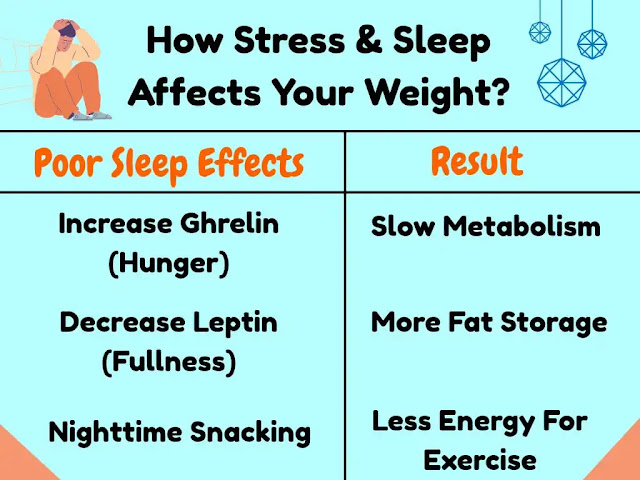
💤 Bad Sleep, Slower Metabolism
The long-term stress can greatly disturb your ability to sleep well:- Long-term stress can increase the production of ghrelin, the hormone which makes you feel hungry.
- Long-term stress can reduce the production of leptin, which informs your brain your stomach is full and should stop eating.
- Long-term stress will make you start eating at nighttime, mostly unhealthy food choices.
🔖 Connection Between Inflammation, Chronic Stress & Weight Gain
Long-term or chronic stress will induce or can lead to inflammation in your body, even if you are feeling absolutely fine and normal. The inflammation functions like your body's defence system, remaining continuously on high alert.So that it can make it very difficult for your body to process the sugar in a proper way, and which causes fat storage. And this in turn will develop belly fat and also will make you exhausted or always tired. Not only that, but this will affect your normal metabolism so that your body will naturally lower the number of calories you burn.
So how can you reduce this inflammation?
For this, you have to start consuming anti-inflammatory food items such as leafy greens, turmeric, a variety of berries, and also nuts. And additionally, practising regular workouts, even if they are light, and the stress management methods like meditation can also really help you.
So how can you reduce this inflammation?
For this, you have to start consuming anti-inflammatory food items such as leafy greens, turmeric, a variety of berries, and also nuts. And additionally, practising regular workouts, even if they are light, and the stress management methods like meditation can also really help you.
📌 Stress Makes Your Body Feel Tired
When a person is in chronic or long-term stress, their body thinks it is in a dangerous situation even if there is no actual harm or danger and goes into survival mode. This leads to:👉 Low energy and make you feel really tired.
👉 Start digesting foods more slowly, which causes bloating or discomfort after eating.
👉 The hormones which control energy (thyroid) and sugar levels (insulin) will be affected.
👉 The body will try to save the energy by burning a fewer amount of calories and storing a larger amount of fat.
All the above will make it easier to gain body weight, even if a person doesn't eat much food.
🔗 How To Break This Repeated Pattern?
You can definitely come out of this repeated pattern. Here are some proven and practical tips you can take to break the repeated pattern:1) Start doing deep breathing or meditation just for 10 minutes each day.
2) Start a habit of daily exercise. Even just the brisk walking can improve your health and reduce stress.
3) Try to sleep for almost 7-9 hours each day. This much duration of sleep is required to make sure you get a quality and restful sleep.
4) To avoid eating junk foods when you are in a stressful situation, you can prepare healthy food before you need it.
5) Drink a sufficient quantity of water to stay hydrated as per your individual needs, and stop drinking too many caffeinated drinks.
6) Try speaking with a mental health expert, or you can write down your feelings in a diary to release or reduce your stress level.
Riya is a 35-year-old woman working as a marketing executive for the last 3 years. She gained 7 kg in the last 6 months without making any change to her diet. Because of her continuous work pressure and stressful life, she was not able to sleep more than 5 hours a day. But after she started practicing yoga and meditation, reducing screen time on her mobile phone and laptop, and eating food with complete attention, she was able to reduce her body weight by 6kg and since she started this routine, she has felt more active, fresh or full of energy.
🔒Frequently Asked Questions
1) Can stress lead to a buildup of fat around the stomach area?The answer is yes, because when you are in a stressful situation, your body makes more and more of the stress hormone cortisol, and as we know, if the cortisol level is high, it can lead to increased buildup or storage of fat, mainly around the stomach area. This type of fat is usually called a stress belly because it is directly associated with stress.
2) What can I do to reduce the level of my stress hormone (cortisol) without the help of medicines?
You can decrease the level of stress hormone by doing some simple natural things like sleeping well for 7-9 hours daily, reducing the consumption of caffeinated drinks, doing daily physical exercises, doing meditation at least for a short duration every day and spending more time with friends and family.
3) Are binge eating and emotional eating the same?
The answer to this question is no, because emotional eating happens when a person eats because of their emotions, such as in a stressful situation or because of boredom or anxiety, and binge eating means eating a large quantity of food quickly, and during binge eating, the person feels like they are not able to stop eating even if they want to.
4) Is it true that managing stress levels can really make it easier to reduce body weight?
Yes, that's absolutely true. If you manage stress, it can really help to reduce your body weight. This is because managing stress can give a balance in your appetite, provide a good sleep and lower emotional eating issues.
Conclusion
When you go through a stressful situation for a long time, it not only affects your mood, but it can also make changes in how your body stores the fat, make you crave some certain unhealthy foods and also slow down your metabolism. When you understand how your stress impacts or affects your body, you will definitely be able to make good decisions for your wellness; just start with small changes and gradually grow.📚 References / Scientific Sources
1) American Psychological Association: Stress Effects on the Body
2) National Institutes of Health: Stress, Cortisol & Obesity Research
3) Cleveland Clinic: Cortisol and Weight Gain
4) Harvard Health Publishing: Why Stress Causes Weight Gain
5) Mayo Clinic: Chronic Stress & Health Effects
2) National Institutes of Health: Stress, Cortisol & Obesity Research
3) Cleveland Clinic: Cortisol and Weight Gain
4) Harvard Health Publishing: Why Stress Causes Weight Gain
5) Mayo Clinic: Chronic Stress & Health Effects
Comments
Post a Comment